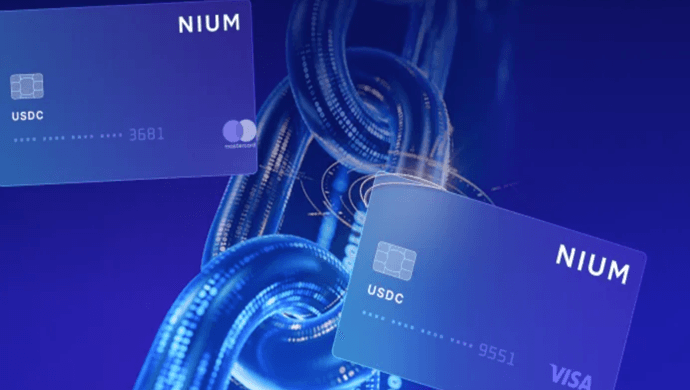
In a deeper push into stablecoin infrastructure, Singaporean fintech firm Nium has announced a tie-up with Coinbase to enable its clients to send, receive, and convert USDC across its cross-border payments network. The integration, now live, gives banks, fintech firms and multinational businesses a way to move money across both traditional fiat rails and blockchain-based systems from a single platform. Coinbase is providing the stablecoin payment infrastructure, wallet layer, liquidity support and custody, while Nium is turning that into a business-facing product for cross-border treasury and payout operations.
Also Read: How is Nium different from a bank? For years, stablecoins have been discussed as the future of global transfers, supplier payments and treasury management. The problem has been less about the token itself and more about everything around it: compliance, wallet infrastructure, on- and off-ramps, liquidity, settlement, and the task of making digital dollars work in a world still ruled by local banking systems.
Nium’s latest move is an attempt to close that gap. From crypto promise to operational rails The pitch is clear. Businesses using Nium can now fund cross-border flows in USDC, receive stablecoins and convert them into fiat currencies when it is time to pay out.
That means a company no longer has to manage separate crypto providers, wallet tools and liquidity arrangements while also maintaining its existing payments infrastructure. Instead, Nium is trying to package the messy middle into one interface. Prajit Nanu, Nium’s CEO and founder, framed the shift bluntly: “The future of money movement is multi-rail.
Fiat and onchain infrastructure will increasingly work together, not in isolation.” That is the central thesis behind the partnership. Stablecoins are not replacing banks or card networks tomorrow. They are being inserted into specific parts of the money movement chain where speed, settlement timing and capital efficiency matter most.
In that sense, Nium is not making a maximalist crypto bet. It is making a practical infrastructure bet. That is important, especially for a company whose customers are not retail traders but institutions looking to move money across borders without tying up too much capital.
Why this matters for cross-border payments Cross-border payments remain one of the most inefficient corners of finance. Businesses often have to pre-fund accounts in multiple markets to ensure they can settle local payouts on time. That keeps capital parked in different jurisdictions, creating friction for treasury teams and making liquidity management more expensive than it should be.
Stablecoins offer a possible workaround. Also Read: How SMEs are using stablecoins to beat currency swings If a business can hold value in USDC and convert only at the point of payout, it can move closer to a just-in-time settlement model rather than locking funds in multiple accounts ahead of demand. That is what Nium is now selling: a way to reduce dependence on prefunding while still connecting to regulated fiat payout systems in real markets.
In plain English, it is about freeing up idle cash. That could be particularly relevant for fintechs and enterprises operating across Southeast Asia, where fragmented payment systems, uneven banking infrastructure and multiple currencies often turn regional expansion into an exercise in operational compromise. The more corridors a company manages, the more painful the capital allocation problem becomes.
Nium claims the integration extends stablecoin payout capabilities across its network of more than 40 licences and more than 190 countries. The geographic breadth is important, but the bigger question is whether clients will trust stablecoins not just as an experimental settlement tool, but as part of day-to-day financial operations. The industry has spent years saying that the moment is near.
Nium and Coinbase are now arguing that it has already arrived. Southeast Asia is fertile ground for hybrid rails Nium is closely associated with Singapore’s fintech ecosystem and has long positioned itself as an infrastructure company for businesses that need to move money globally rather than through consumer-facing apps. That is a useful vantage point in a region where cross-border commerce is growing faster than the rails underneath it.
Also Read: How stablecoins are disrupting traditional financial systems Southeast Asia is full of businesses that sell internationally, hire across markets, collect in one currency and pay out in another. Marketplaces, creator platforms, SaaS firms, travel players, gig economy platforms and remittance providers all run into the same problem sooner or later: local payment systems may be digitising, but international settlement is still too slow, too expensive or too dependent on prefunded accounts. Stablecoins, particularly dollar-backed ones such as USDC, are becoming harder for infrastructure providers to ignore because they offer a