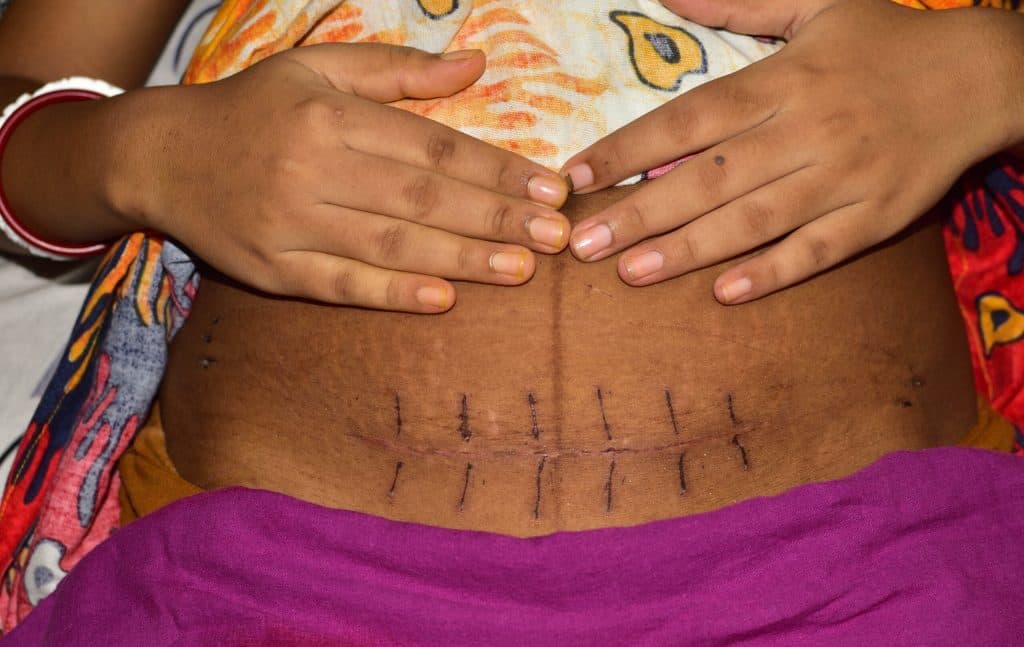
It is the wish of every family, especially women, to one day have a baby as this brings joy. This does not always come easy as sometimes the woman is forced to undergo caesarian section (CS) due to various factors. According to Annie Chinoko, a medical technician and in-charge at Dzenza Heath Centre in Lilongwe, a baby’s position, mother’s age or disability are among factors that determine a CS.
She says the procedure aims at serving the mother and the baby, denouncing fears among some people that undergoing CS is risky. “When a woman is told she will undergo an operation, she normally becomes stressed, worrying about the outcome. Even after the operation, there are issues about care of the wound which affects the wellbeing of the mother,” she says.
Chinoko further says as a medical practitioner, one has to be composed for the operation to be a success. She added that the procedure is safer now that in the past. Former National Organisation of Nurses and Midwives of Malawi (NONM) president Dorothy Ngoma says a caesarian section is crucial for safe motherhood.
“Some mothers are as young as 13 years old, making it difficult to manage child birth. This is why government recommends mothers to be at least 18 years old before getting pregnant,” she observes. Ngoma says Malawi has made good strides in promoting safe motherhood with few mothers dying from maternal complications.
She says in the 1980’s for example, about 2 000 out of every 100 000 women died during child birth while currently at least 200, describing it as good progress. According to Ngoma, CS has contributed to this, encouraging medical practitioners to continue working professionally. “Much as we have registered some progress, my wish is to reach a point when no woman ever dies during child birth.
I therefore, urge authorities to ensure that enough resources such as blood, fuel and medical personnel are available in our health facilities,” she said. In their 2025 reports, the International Caesarean Awareness Network (ICAN) and the World Health Organisation (WHO), stress that a caesarian section is recommended only when vaginal delivery poses a risk to the mother or the baby’s life. The two organisations emphasise the avoidance of unnecessary surgeries and timing elective procedures at or after 39 weeks of gestation to minimize risks.
“A CS is a vital, life-serving procedure that is highly effective at reducing maternal and newborn mortality. The procedure should only be performed when necessary, as overuse in the absence of medical need provides no additional benefits and can lead to significant complications,” says WHO.