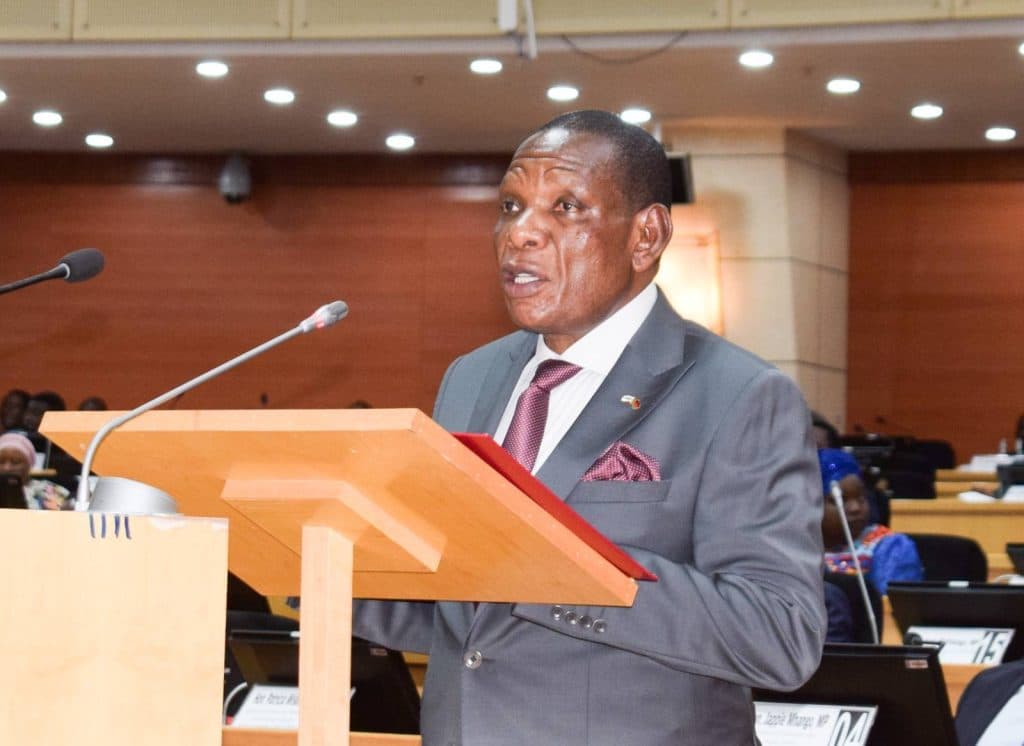
Malawi’s economic outlook for 2025 and 2026 shows expected improvement in growth and external balances, but significant risks continue to cloud the medium-term prospects, the African Development Bank (AfDB) has said. In its update on Malawi, the multilateral bank said the outlook remains vulnerable to external and domestic shocks that could slow the anticipated gains. Mwanamvekha: Outlook cautiously positive. | Nation Among the key risks is the US reciprocal trade tariffs and aid cuts, delays in resolving the debt crisis and climate-related shocks, which could undermine fiscal stability, infrastructure investments and agricultural recovery.
Reads the update in part: “Addressing these risks will require accelerated structural reforms, strengthened fiscal discipline, and enhanced climate resilience measures to sustain the growth momentum. “On the demand side, growth will be bolstered by a rebound in exports and improved real incomes, supporting consumer spending and investment. Inflation is expected to decline to 23.8 percent by 2026, reflecting better food supply conditions.” AfDB has since projected gross domestic product (GDP) to rise to three percent in 2025 and 3.8 percent in 2026, driven by a recovery in agriculture and tourism, alongside gains from mining investments.
The Ministry of Finance, Economic Planning and Development has since projected real GDP growth at 3.8 percent in 2026 and further strengthen to 4.9 percent in 2027, while the World Bank and African Development Bank’s 2.3 percent and 2.9 percent estimates, respectively. A 2026/27 National Budget Report, jointly done by Economics Association of Malawi and National Planning Commission, observed that the budget’s macroeconomic assumptions of 4.1 percent growth is ambitious, but achievable if planned investments materialise and structural reforms are sustained. Reads the report in part: “A general observation regarding the assumptions is that, as in the previous fiscal years, there is an optimism bias in the forecasts for both growth and inflation.
“Such biases could lead to unrealistic expectations regarding revenue generation and expenditure planning.” Mzuzu University economist Christopher Mbukwa said the divergence between government and international organisations’ economic forecasts lies in the political commitments that governments have and would like to achieve. Minister of Finance, Economic Planning and Decentralisation Joseph Mwanamvekha conceded in his 2026/27 National Budget Statement that the country’s economic outlook remains cautiously positive. “This growth will be supported by strategic investments in key productive sectors of agriculture, tourism, mining, manufacturing, and small and medium enterprises. “Special focus will be put on increased production and value addition, export diversification and import substitution.”