Dubai: Sheikh Hamdan bin Mohammed bin Rashid Al Maktoum, Crown Prince of Dubai, Deputy Prime Minister, Minister of Defence, and Chairman of the Executive Council of Dubai, has reviewed a set of new transport projects aimed at making travel across the city smoother, safer and more sustainable.During a visit to Dubai’s Roads and Transport Authority (RTA), Sheikh Hamdan was briefed by Mattar Al Tayer, Director General, Chairman of the Board of Executive Directors of the RTA, on three key initiatives: a rapid intervention vehicle for emergencies, a smart bus station, and new parking facilities for bicycles and electric scooters.Get updated faster and for FREE: Download the Gulf News app now - simply click here.Sheikh Hamdan affirmed that ambitious development initiatives and pioneering projects undertaken by Dubai to enhance public wellbeing, with mass transit systems being notable, are testament to the vision of His Highness Sheikh Mohammed bin Rashid Al Maktoum, Vice President and Prime Minister of the UAE and Ruler of Dubai, to advance Dubai's position among the world’s leading cities in adopting innovative solutions and future technologies.Dubai RTA launches major traffic overhaul across eight key locationsSheikh Hamdan was accompanied by Sheikh Ahmed bin Saeed Al Maktoum, President of the Dubai Civil Aviation Authority, Chairman of Dubai Airports, and Chairman and Chief Executive of Emirates Airline and Group. The visit reflects the leadership’s keenness to follow up on Dubai’s focus on tracking progress on the ground and ensuring projects are delivered on time.A focus on smarter, future-ready mobilitySheikh Hamdan said the projects reflect Dubai’s wider push to rethink how people move around the city.He said mobility in Dubai is no longer just about building roads and infrastructure, but about using technology to improve daily life.
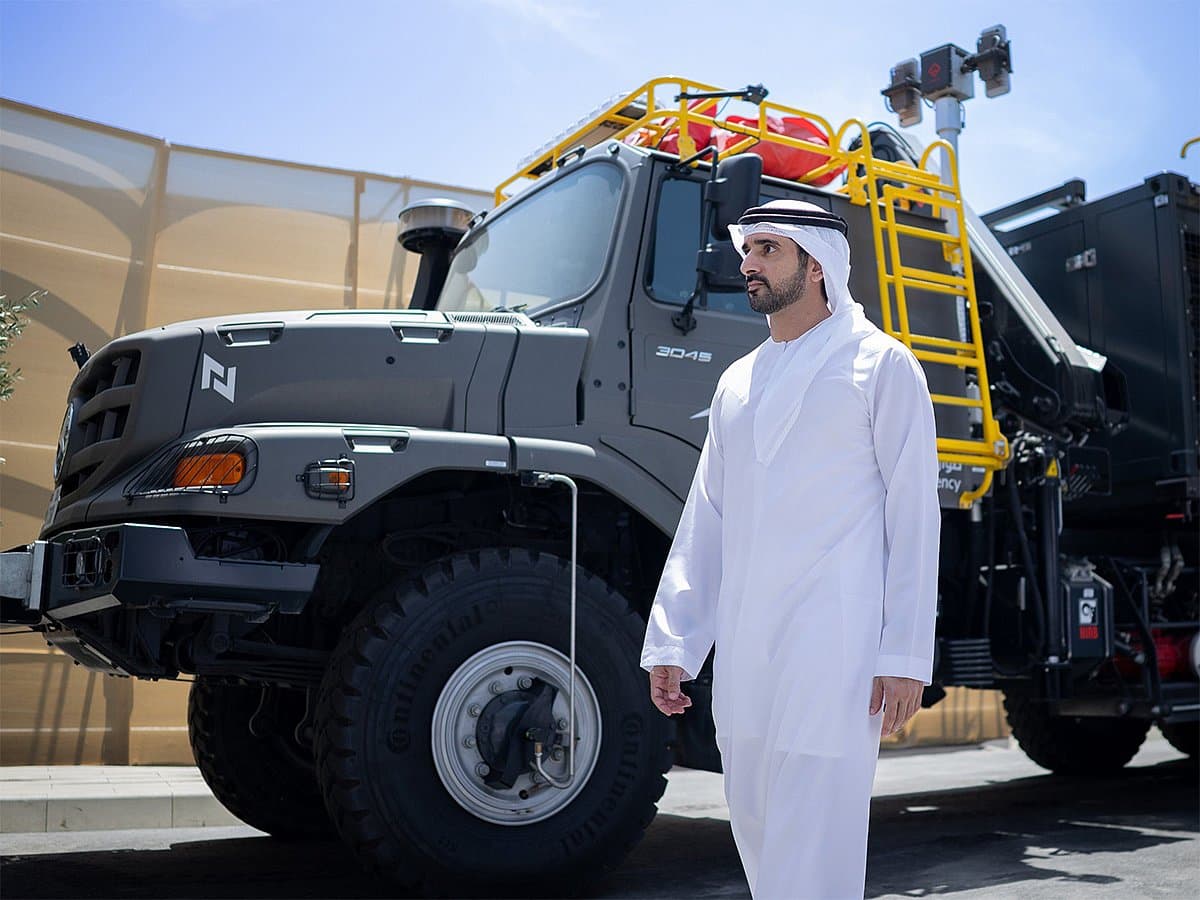
The goal, he added, is to create a system that is efficient, sustainable and easy to use for everyone.Dubai is also working to stay ahead by testing and adopting new ideas that can shape the cities of the future, he noted.Traffic congestion: RTA plans bold moves to keep Dubai moving Rapid intervention vehicle cuts response timeOne of the main highlights was a specialised rapid intervention vehicle designed to deal with emergencies, especially heavy rainfall and waterlogging.The vehicle is equipped with four high-capacity pumps that can move around 60,000 litres of water per minute. This is far more efficient than traditional equipment and allows faster response during floods or water accumulation on roads.It can operate in water depths of up to 1.8 metres and is designed to reach areas that are difficult for conventional tankers to access.The system also includes a rescue boat, a thermal drone for monitoring, and a backup power generator.
A built-in lighting tower allows work to continue in low visibility.Officials said the vehicle can reduce response times for water-related incidents by more than 75 per cent. This helps keep roads open, reduces disruption, and improves safety for motorists.Road, underground and sky ahead: Dubai’s Next-Gen transportSmart bus station nears completionSheikh Hamdan also reviewed a smart bus station project that is close to completion. Located on Sheikh Zayed Road in Al Barsha 2, near Mall of the Emirates, the station is expected to be fully operational by the end of the month.The station offers fully digital, contactless services, allowing passengers to plan and pay for journeys using the nol card and S’hail app.It is powered in part by solar energy and uses artificial intelligence to manage crowds and detect violations.
Sensors monitor air quality to improve comfort for passengers.The facility has also been built to meet high environmental standards, offering a cleaner and more energy-efficient space for commuters.From flying cars to AI traffic management: Dubai shapes the 20-minute city of tomorrow Supporting cycling and e-scooter useAnother key project focuses on improving facilities for cyclists and e-scooter users.New parking stations are being introduced at transport hubs and busy locations across the city. These include shaded areas, charging points for scooters, and smart systems to track usage.The aim is to make it easier for people to combine cycling or scooter use with public transport, especially for short first and last-mile journeys.Dubai has seen a steady rise in cycling activity, with trips increasing by 23 per cent to reach 57.6 million in 2025.A phased rollout of the new parking facilities is planned, starting with pilot locations in July 2026. Full expansion is expected by 2028.Keeping projects on trackDuring the visit, Mattar Al Tayer said the initiatives are part of RTA’s broader effort to adopt global best practices and use advanced technology to improve transport services.He said the authority is focused on building a system that supports economic growth while improving everyday life for residents and visitors, and reinforc