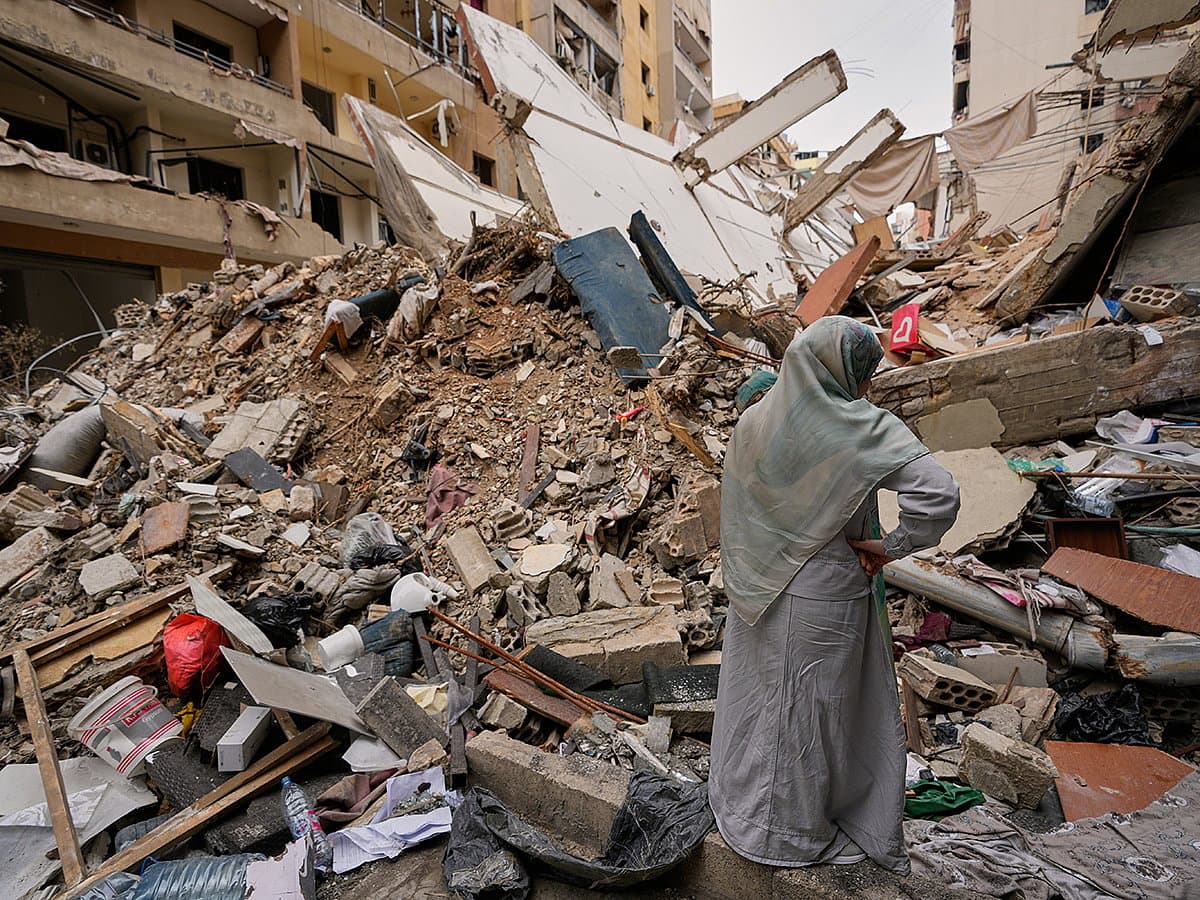
Ramallah: The post-October 7 order in the Middle East - such as it is - is barely pieced together by conditional ceasefires and mutual threats.Iran has suffered severe blows, yet not enough to shake its posture at the negotiating table. Its allies Hezbollah in Lebanon and Hamas in Gaza are degraded but functioning, with Israel still regularly launching strikes at both. Prime Minister Benjamin Netanyahu is under mounting pressure to translate military achievements into clear dividends ahead of elections later this year.US President Donald Trump, who boasts of his peacemaking abilities, still appears to be seeking a nuclear deal with Iran and wider peace in the Middle East.
But talks so far have produced no results and the two countries are locked in an escalating standoff over the Strait of Hormuz.Major military operations have halted, but the underlying grievances - which long predate Hamas' October 7, 2023, attack - have not been addressed. Millions of people are still displaced, and many fear the fighting could resume at any time.US-Iran ceasefire: Tehran claims US is caught in a war quagmire of its own making Ceasefires "don't fix anything - they just stop things from getting worse," said Michael Ratney, a former US ambassador to Saudi Arabia. "It's part of an answer to an immediate political problem, which is (Trump) needs to get out of war and can't figure out how do that."A closed strait and an escalating standoff with IranFor weeks, Trump has vacillated between threats to unleash major attacks on Iran's infrastructure - at one point threatening to end "a whole civilization" - and attempts to negotiate an agreement over its nuclear program and other disputes going back decades.This week he extended a ceasefire but said he would maintain a US naval blockade on Iranian ports.
On Wednesday, he vowed to attack Iranian fast boats in the Strait of Hormuz, which Tehran has effectively choked off since the start of the war, sparking a worldwide energy crisis.Iran has given no public indication it is willing to make concessions on its nuclear program, ballistic missiles or support for regional proxies. It says the strait will remain closed until the U.S. lifts its blockade and Israel halts attacks on Iran-backed groups like Hezbollah.From Gaza to Iran: What happens after the guns fall silent?Neither side seems to want full-scale war and a new round of ceasefire talks was planned Saturday in Pakistan.Iran's leaders, based on their statements on social media, seem to have concluded that they can withstand the blockade longer than Trump can bear soaring gas prices and an unpopular war, especially with US midterm elections later this year.Jon Alterman, chair of Global Security and Geostrategy at the Washington-based Center for Strategic and International Studies, said Trump's record shows his instincts lean toward making headlines and announcing quick results."The most visible part of the fighting has stopped, but the less visible efforts are roaring ahead," he said.
"Ceasefires can seem comfortable but lock in unsustainable patterns, with one side feeling it has lost the urgency to resolve the underlying conflict."A shaky truce in LebanonA truce in Lebanon agreed to last week has largely held outside of the border area, where fighting continues. Israel has indicated it plans to occupy a swath of southern Lebanon indefinitely. The Iran-backed Hezbollah, which is not an official party to the truce, is demanding that Israel withdraw.Trump announced a three-week extension of the truce on Thursday after a meeting between Israeli and Lebanese officials at the White House.Abbas Araghchi meets Pakistan army chief Asim Munir as Iran–US tensions deepenThe US and Israel have demanded that Lebanon's government assume responsibility for disarming Hezbollah.
Beirut tried to enact part of a plan to do so before the outbreak of the latest fighting. But Lebanese leaders acknowledged their limited capacity, and their efforts yielded little as Hezbollah retained the ability to fire thousands of missiles and drones toward northern Israel over the past two months.With Beirut unwilling to risk civil war by confronting the militants directly - especially while Israel occupies Lebanese territory - the ceasefire offers some reprieve.As in Gaza, Israeli forces have drawn a "yellow line" in southern Lebanon, demolishing homes that Israel claims were used by Hezbollah, preventing people from returning and announcing strikes on people it says are militants attempting to cross it.
Many in Lebanon fear a return to Israel's 1982-2000 occupation of the south, which ended after years of deadly Hezbollah attacks on Israeli troops.On Wednesday, a day before the talks in Washington, Israeli strikes killed a well-known Lebanese journalist covering southern Lebanon and wounded another reporter. Health officials said Israeli forces fired on an ambulance crew that was trying to rescue journalist Amal Khalil and forced it to turn back. Israel denied that