For a long time, terminal automation has felt like something you either outgrow or overcomplicate. It starts with a couple of useful commands, then a script, then a scheduled task, and before long, you’ve got a little system that only makes sense because you were the one who built it. That can be satisfying for a while, but it also gets fragile in a hurry. The moment a task needs context, judgment, or even a bit of flexibility, the whole thing starts to creak.
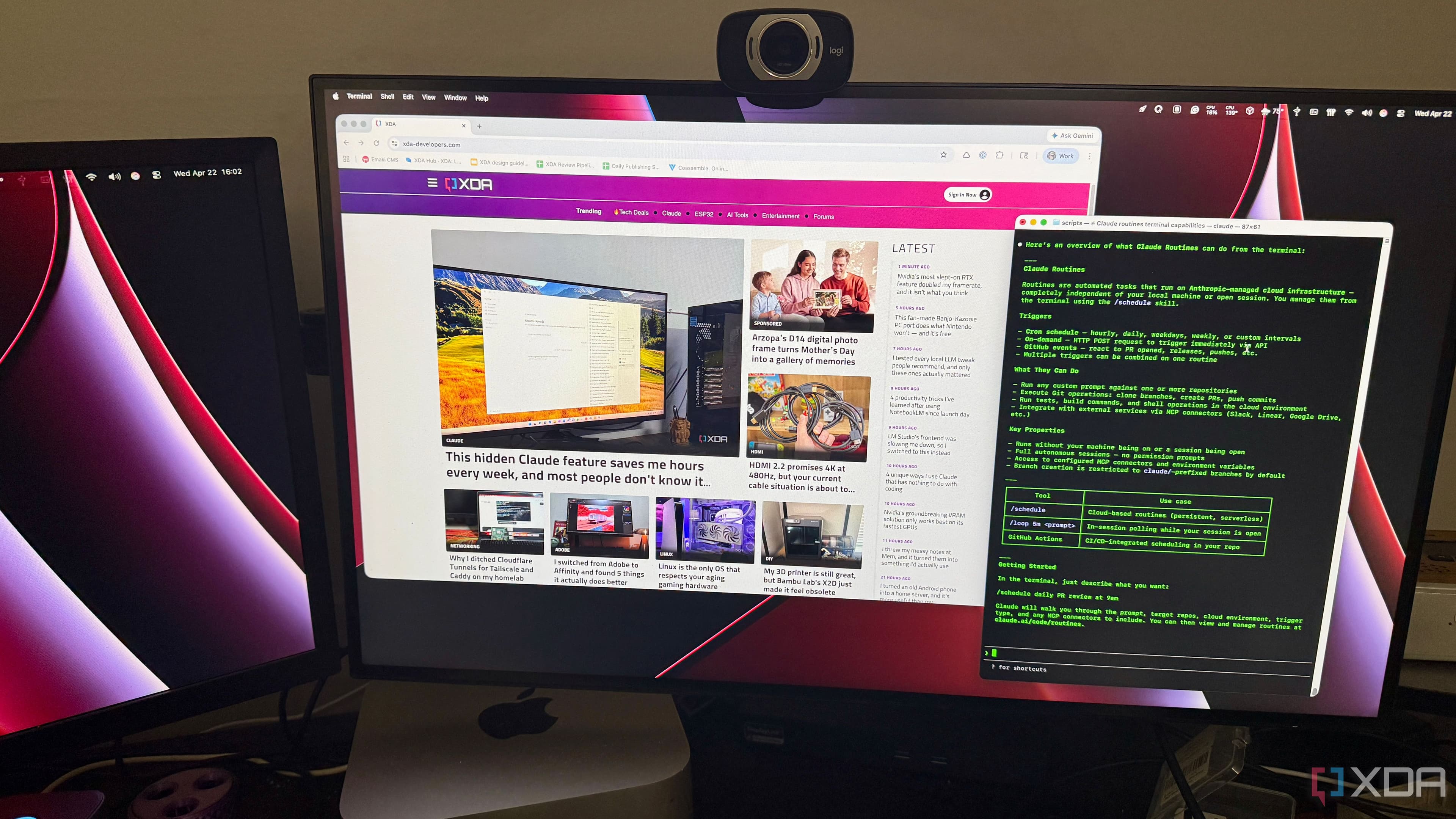
Terminal automation outgrew shell scripts, and Claude's Routines are proof
Jeff Butts·XDA Developers··1 min read
X
Continue reading on XDA Developers
This article was sourced from XDA Developers's RSS feed. Visit the original for the complete story.