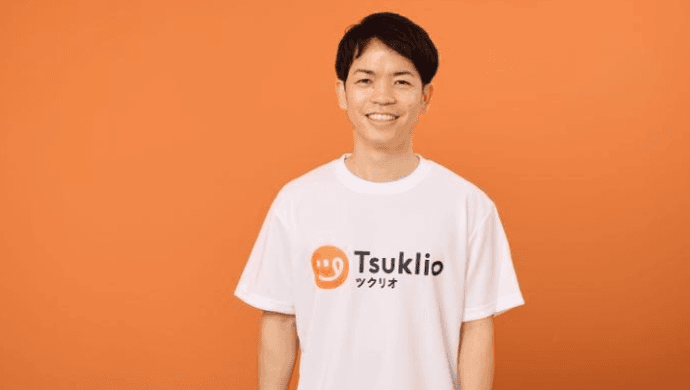
Antway CEO Kei Maejima Singapore is not short of food. It is short of time. That is the gap Japan’s Tsuklio is trying to exploit as it enters the city-state, betting that a growing slice of households would rather pay up for ready-made, home-style meals than juggle grocery runs, meal kits, cooking, and dishwashing after work.
The company, operated by Tokyo-based food-tech startup Antway, has launched in Singapore with a weekly household plan offering four servings across three meals, effectively a family dinner solution for three to four people. The price is roughly SGD211 (US$155) a week, which immediately places Tsuklio at the premium end of the convenience-food spectrum. Also Read: Why continuity plans for F&B businesses is a must That price point is crucial.
In a market where hawker food remains affordable and food delivery is deeply entrenched, Tsuklio is not trying to compete with cheap lunches or impulse orders. It is going after a narrower but potentially lucrative segment: dual-income households, working professionals and families willing to pay for predictability, nutrition and one less domestic headache. The early signals suggest there is at least some appetite for that proposition.
More than 3,000 people registered interest before launch, according to the company. A Japanese model, exported with little room for error Tsuklio’s pitch is built on a central-kitchen system rather than restaurant-style preparation or a pure marketplace model. Meals are cooked daily, supervised by registered dietitians, delivered chilled rather than frozen, and sold through a subscription plan.
The idea is to industrialise “home-cooked” food without making it feel industrial, not the easiest trick in food-tech, a sector littered with startups that discovered consumers love convenience right up until the bill arrives. Still, Antway is not coming to Singapore as a blank slate. The company says Tsuklio has served more than 30 million meals across 46 prefectures in Japan.
For the financial year ending January 2026, it posted a gross merchandise value of about US$57 million. It also said the number of meals provided in April 2025 rose 64 per cent from the same month a year earlier. Those are meaningful numbers, especially in a category where operational consistency tends to separate survivors from slogans.
The business was previously known as Tsukurioki.jp and was rebranded as Tsuklio in March 2026 as Antway prepared for international expansion. Singapore is its first overseas market. Why Singapore looks attractive For Tsuklio, Singapore is more than a rich city with strong logistics.
It is a compressed test case for urban Asia. The company said it chose Singapore after market validation that included quantitative studies, qualitative interviews and a four-week pilot run in March 2025 with a local food and beverage partner. That trial involved 70 participants and, according to Antway, showed strong weekly order rates and retention despite the premium pricing.
Also Read: Grab’s US$600M deal could save Taiwan from a delivery monopoly That outcome helps explain the company’s logic. Singapore offers a dense, affluent consumer base, reliable cold-chain and delivery infrastructure, high rates of dual-income households and a customer segment already comfortable with subscriptions. It also has a large population of professionals for whom convenience is not a luxury add-on but a budgeting category.
In other words, this is a market where paying to remove friction from daily life makes emotional and economic sense. Antway CEO Kei Maejima framed the opportunity as a gap between “health-conscious meal kits and everyday dining needs of households in Singapore”. The company argues that there is still open space between cooking from scratch and ordering takeout every night.
That may be true. Meal kits demand labour. Restaurants and delivery apps offer variety but can be expensive, nutritionally inconsistent and difficult to turn into a dependable family routine.
Tsuklio is trying to occupy the middle ground: less work than cooking, less randomness than delivery and more structure than ad hoc dining. Southeast Asia may be the launchpad, but not the ceiling Antway has been careful not to name the next markets on its expansion list. Publicly, it has only said it is evaluating partnership and franchise opportunities across the region, especially with operators that already have central-kitchen infrastructure.
That caveat is revealing. Tsuklio’s model does not travel well everywhere. It needs dense urban demand, dependable food logistics, consumers with enough disposable income to pay for outsourced routine meals and local partners capable of operating kitchens at scale.
That narrows the field, but it still leaves several attractive targets in Asia. Within Southeast Asia, cities such as Bangkok, Kuala Lumpur, and parts of Jakarta could become interesting over time, particularly in affluent urban districts where household convenience spending i