In the wake of the Artemis II mission’s successful end, we have to give a hand not only to its remarkable crew but to whoever was in charge of their social-media strategy. NASA’s first astronaut mission to the moon in more than 50 years didn’t involve actually landing there; the Artemis II instead flew past the moon to its far side, deeper in space than any previous crew has ventured. But it was a chance to capture the imaginations of new generations of future space explorers, while also calling back to the one-giant-step-for-mankind sense of awed enormity that characterized the 20th-century Space Race.
In addition to the breathtaking views of Earthset and a full lunar eclipse, viewers who checked in on NASA’s streams got to see and hear some of the quotidian details of life in zero gravity directly from crew members Victor Glover, Christina Koch, Reid Wiseman and Jeremy Hansen. We read updates on the Orion spacecraft’s malfunctioning toilet, wondered whether the floating jar of Nutella was intentional product placement, surveyed the playlist of wake-up songs that ensured the crew members and NASA were operating on the same schedule and were privy to the moment of overwhelming emotion that followed Wiseman naming a lunar crater for his wife Carroll, who passed in 2020.
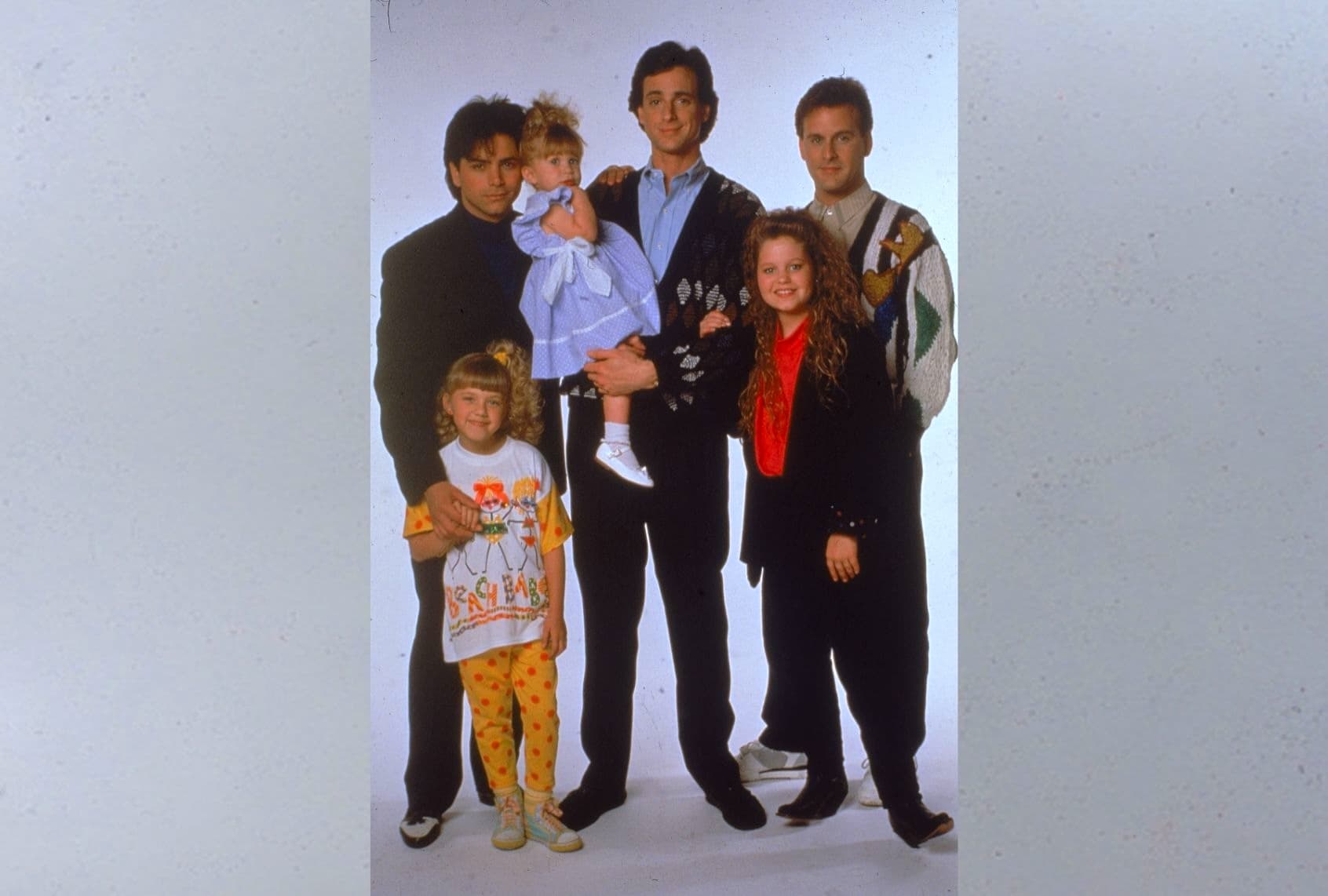
Related Why millennials and Gen Z love “Friends” But perhaps the most viral moment of the crew’s trip around the moon was the Instagram reel of the astronauts’ send-up of the “Full House” opening theme, in which each crew member is introduced by name and title with a shot of them looking surprised but game to play along, set to the undeniable earworm of “Everywhere You Look.” Commander Reid Wiseman ends the reel by explaining the gag to any youngsters who might have had no idea why this was funny or charming or even recognizable: “We were doing scenes from bad ’80s sitcoms when they introduce the cast of characters,” he says. “So that’s why we all did those, and we are cracking up up here.” And they did seem to be having fun.
So has everyone in the many “Full House” opening re-creations that have gone viral in the decade since the San Francisco Giants created their “Full Clubhouse” parody, which included a cameo from one of the sitcom’s stars, Dave Coulier. The trend really took off in 2020, when the original cast spoofed themselves in “Full Quarantine,” urging viewers to comply with COVID lockdown protocols. Since then, parodies have become a social-media staple for real-estate teams, healthcare clinicians, church pastors and even the cast of 2025’s “Superman” reboot.
The omnipresence of the spoof is a testament to why it works: The self-consciously corny nod to TV tradition is the hallmark of can-do people who want the best for everyone: a “Full House” send-up says, You can trust us. Want more from culture than just the latest trend? The Swell highlights art made to last.
Sign up here In the early years of television, voice-over introductions to shows and their casts were a necessity of the medium. In 1952, “The Adventures of Ozzie & Harriet” made the leap from radio to television, bringing the format of the radio show: a broadcast announcer who intones the show’s name, its cast members and its sponsors, often against a sweep of big-band bombast. Family sitcoms like “The Donna Reed Show” and “The Dick Van Dyke Show” continued with this tradition into the 1960s, but as sitcom story concepts became more complex, the medium required more from show openers.
The meticulous tracking of viewer behavior — not just what they watched but how they watched — became a key focus in the 1960s. TV networks presented potential audiences with more things to watch and branched beyond the family sitcom – with settings like law enforcement (“Car 54, Where Are You?”), the military (“McHale’s Navy”) and the beach (“Gidget”) – and TV shows had only the opening credits with which to entice viewers not to change the channel. It was the dawn of the expository theme song, whose lyrics beckoned to viewers with backstory: The sea shanty that explained how seven castaways landed on “Gilligan’s Island,” the organ-driven exhortation that audiences “really oughta see” what goes on with the ghoulish, finger-snapping “Addams Family” and the bluegrass ditty “The Ballad of Jed Clampett” that recounted how “The Beverly Hillbillies” got their name.
Networks wanted TV to be a daily routine, and opening sequences helped make that happen. The most famous story-style intro — it literally begins with, “Here’s a story” — belongs to “The Brady Bunch,” which bridged the 1960s and ’70s, a decade that saw the ebbing of title-sequence stories. Viewers were now familiar with TV, which meant TV shows had less upfront explaining to do.
Instead, they could use credits sequences with lyrics and musical styles that captured the feel of sitcoms at a time when they were starting to challenge audiences, bringing racial consciousness and real-world social issues to America’s living-room consoles. The