For most women, pains during menstrual periods are normal. Some suffer from abdominal cramps, while others endure back pain. Most of the time, the discomfort is managed with simple medication such as painkillers.
As a result, some girls miss school and older women excuse themselves from work or businesses. But, at times, the pain that may appear normal becomes intense and doctors prescribe painkillers, not knowing that these are not just normal menstrual pains. It may take years for them to diagnose the underlying factor: Endometriosis.
Some menstrual pain may signal the onset of the chronic disorder, which is a life-changing condition in which tissue similar to the endometrium (the inner layer of the uterus that sheds during menstruation) grows outside the uterus. These tissues become inflamed and bleed during menstruation. Because the blood cannot be expelled from the body, it accumulates, forming cysts and adhesions that cause severe pain.
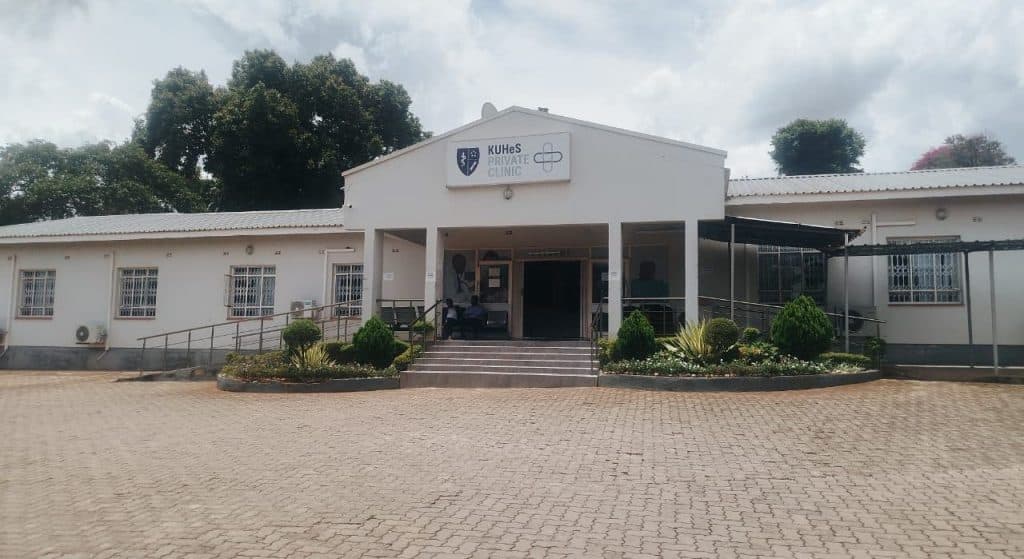
The two were diagnosed at KUHeS clinic. I Nation Endometriosis can affect the pelvic area, including the ovaries, fallopian tubes, uterine wall, and even the bladder. According to a 2021 global study on the burden of endiometriosis among women of the reproductive age of 15 to 24 between 1990 and 2021, the incident rate was pegged at 399.49 per 100 000 in 1990 and 304.21 per 100 000 in 2021.
The results, published in the Public Library of Science, showed that this represents between six and 10 percent of age-bearing women worldwide. Local data is unavailable. However, Dr.
Majorobela Ramarikhoane, a gynaecologist responsible for maternal and reproductive health at the Mulanje Mission Hospital, says he treats about 10 women in a month who are mostly unaware of their condition. Ellen Mchenga, a 34-year-old woman from Dowa District currently based in Mzuzu, describes endometriosis as ‘evil’, as she shares her story. Her experience began when she was 13 during her first menstrual period.
It was extremely painful, and she had to rely on painkillers. As a young girl, she assumed painful periods were normal and believed every woman endured such pain. She frequently missed classes due to the severity of her condition.
At 24, Ellen secured a job as an accountant, but the struggle continued. Each month, she found herself unable to work during her menstrual cycle, eventually forcing her to quit her job. In 2023, Ellen experienced one of the most terrifying nights of her life when she was rushed to the emergency ward at Mzuzu Central Hospital (MCH).
She recalls: “I had intense pain. I was crying in agony. I could neither sleep nor stand. Sitting down was a painful feat.
I could literally do nothing. I was only given strong pain medication. No effort was made to investigate further. I endured this pain every month, even outside my menstrual cycle.” After multiple hospital visits, an ultrasound scan at MCH revealed an ovarian cyst and she was referred to a gynaecologist.
Securing an appointment at a public hospital proved difficult and when she finally saw the specialist, she hoped for answers—but she was told it was nothing serious. The gynaecologist informed her that the cyst would disappear on its own. They prescribed a daily dosage of very strong pain medication.
Meanwhile, her condition worsened. She began experiencing pelvic pain radiating to her legs, making it difficult to walk. She lived in constant fear, uncertain about what was happening in her body.
Determined to find answers, Ellen travelled to Blantyre, where she consulted a gynaecologist at the Kamuzu University of Health Sciences (KUHeS) Clinic in Blantyre. There, she was diagnosed with an endometrioma, commonly known as a chocolate cyst. The fluid-filled sac formed from old blood in the pelvis and the medic recommended a surgery.
Ellen had no option but to agree. During the operation at KUHeS Clinic last year, doctors discovered that her pelvic organs were stuck together. She had two chocolate cysts, and a biopsy confirmed endometriosis.
Both ovaries were affected, and parts of them had to be removed due to severe damage. Although she experienced relief for a few months after the surgery, the pain eventually returned. Since endometriosis has no permanent cure, patients often undergo repeated surgeries and treatment for temporary relief.
Ellen says the condition has affected her physical, emotional and social aspects of life. She lives with chronic fatigue, pelvic and back pains, acid reflux, bloating and joint pains, among others. “I am in pain daily and I rely on medication.
I had to quit my job because I could no longer perform. I used to travel frequently for business, but now I am forced to stay at home. Sometimes I can’t even walk because of the pelvic pain.
“I have battled depression for years, and the hardest part is that endometriosis has affected my fertility. I feel like a burden to my family because they have to help me so much. Being dependent on others is emotionally draining,” she said. Ellen also highl