This story was originally published by Slate and is reproduced here as part of the Climate Desk collaboration. Quiet fell over the room, which was neither full nor very loud to begin with, and the 2026 Florida Citrus Show began. “It should be a great day,” began the event’s first speaker.
“Rain should hold off today, even though we definitely need more rain.” No one laughed. There was no need to say that things were bad. Everyone knew it.
The mood wasn’t sour—citrus farmers could handle sour. It was something else. Postapocalyptic. Florida is in the midst of its worst drought in 25 years, but the dry spell actually ranked far down on the list of challenges these bedraggled growers were facing.
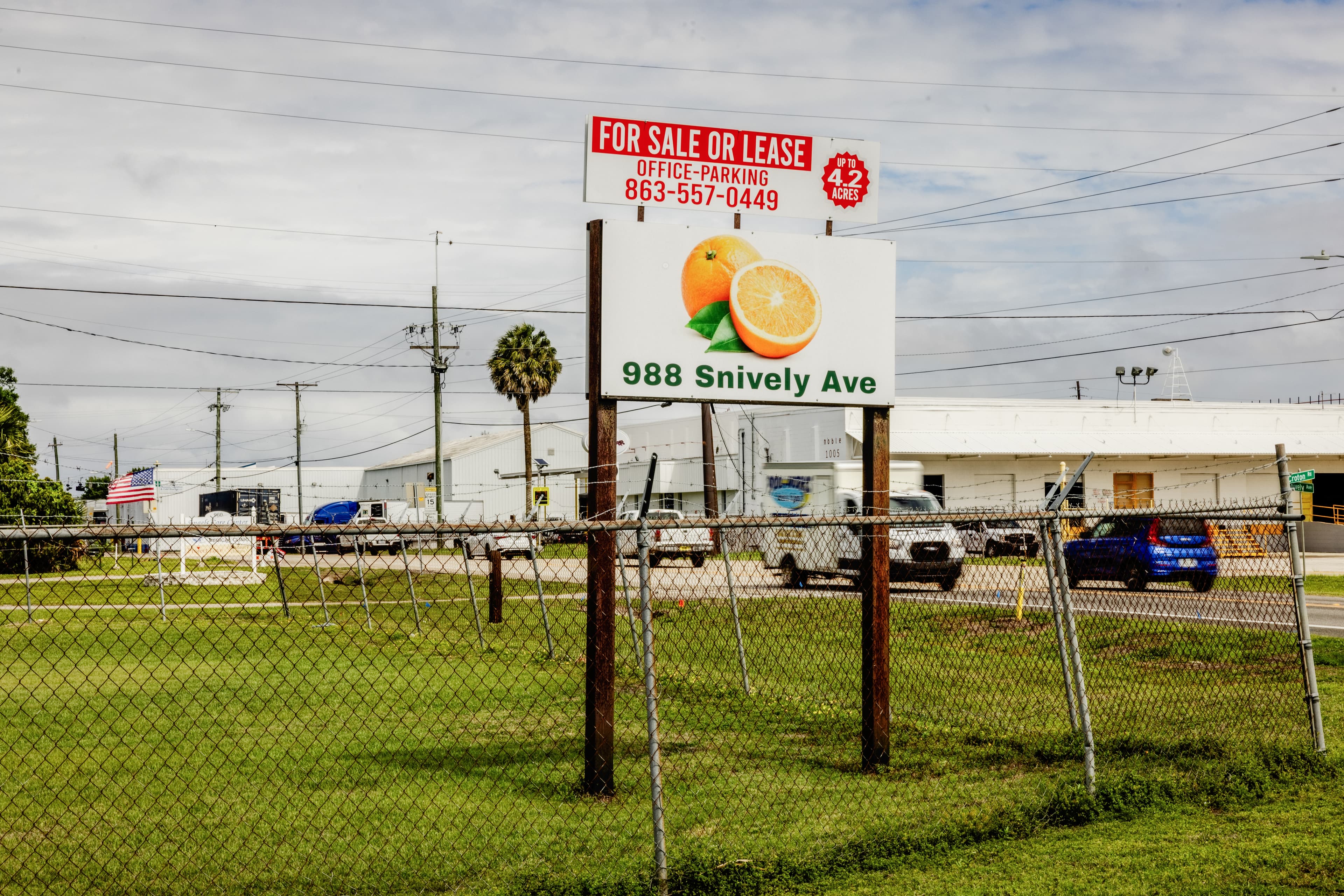
You are today more likely to see the oranges printed on Florida’s 18 million license plates than a box of actual fruit. In 2003, the mighty Florida orange industry produced 242 million boxes of fruit, with 90 pounds of oranges per box, most of which went on to become orange juice. Now, not even 25 years later, the United States Department of Agriculture was forecasting a pitiful 12 million boxes of oranges, the least in more than 100 years, the worst year since last.
A decline of more than 95 percent. And everyone knew, more or less, that even that figure was not happening. “Twelve million?
I would doubt it,” Matt Joyner, CEO of Florida Citrus Mutual, the state’s largest trade group, told me. There was chatter that even 11 million might be out of reach. Could the total end up being less than that, just seven figures?
In Florida, the citrus capital of the world, you are today more likely to see the oranges printed on the state’s 18 million license plates than a box of actual fruit. Rick Dantzler, chief operating officer of the Citrus Research and Development Foundation, took the podium. He was blunt.
“It’s been a dumpster fire of a year,” he said. On the list of immediate problems: the implementation of tariffs and retaliatory tariffs, then the government shutdown, then a stunning, historic freeze, days long, at the end of January and early February, that besieged the fragile orange trees. And yet those, too, were just footnotes to the even larger problem.
Already, Florida had lost about three-quarters of its citrus growers. The last of them, these spent survivors, these hangers-on, had trudged to the Citrus Show to talk about the real problem, which was the disease. In 2005, Florida first got signs of a new affliction in its groves called citrus greening disease.
It also has a Chinese name, Huanglongbing, or HLB, because it came from China, where oranges also came from in the first place. Already, Florida had lost about three-quarters of its citrus growers. Citrus greening disease is caused by a bacterial infection that is delivered by the gnawing of the Asian citrus psyllid. (It’s now believed the psyllid first turned up near the Port of Miami in 1998.) The flea-sized psyllid bites the leaves and transmits the disease, which slowly chokes out the tree’s vascular system from the inside, taking years to finally show itself.
By the time a tree is displaying symptoms—three to five years, in most cases—it’s too late. Floridian farmers are no strangers to disease. When HLB first began to spread, there was no indication it would be any worse than any other bug that had appeared over the years.
The farmers did what they always did: They sprayed and sprayed, chemicals and pesticides, stuff so powerful that the Centers for Disease Control and Prevention and the US Food and Drug Administration freaked out about potential risks to human health. But greening spread anyway. Industry groups and the state poured money, millions, into finding a cure, and every time they thought they’d figured it out, it didn’t work, and the greening accelerated.
Hurricanes turned out to be a vector for spreading the little winged bug. The wind carried the psyllid all over the state, dropping it off in hundreds of thousands of acres of groves. Soon enough, trees everywhere were showing blotchy, mottled, yellowed leaves and suffering from twig dieback and sparse foliage.
Under duress, the trees would drop all their fruit on the ground prematurely. What rare fruit survived to maturity on these little, addled trees was misshapen, acrid, and stubbornly green on one end; in short, it tasted terrible. Even after being squeezed and processed and pasteurized, the juice was gross.
Now, according to the University of Florida website, the disease is “incurable.” It warns: “There is currently no treatment for citrus greening. Once a tree is infected, it will eventually become unproductive and may even die.” I asked numerous people—farmers and industry leaders and researchers—to estimate how many trees in Florida now have greening. The answer was resounding: 100 percent.
Every single tree. The Citrus Show was meant to rally those weary troops, to assure them that help was on the way, that this was the bottom. That there was reason to hold on. And there was: There